Floors
Plastic sheeting is taped tight at the baseboards, with a walkable layer over it so the crew is not slipping on wet debris.

Temecula Premier Painting is a trusted specialist in popcorn ceiling removal in Temecula, CA and across Riverside County, specializing in asbestos testing before disturbance, wet scraping of acoustic texture and skim-coated ceiling painting. We offer light orange peel retexturing and full ceiling repainting.
Our team provides floor-to-ceiling plastic containment, delivering smooth, bright ceilings that are easier to patch later, for both residential and commercial projects. The crew that walks your rooms is the crew that scrapes and finishes them, and we write a scope naming the lab test, the skim coat, the primer and the number of finish coats before a start date is set.
From sealing the air returns and light boxes to the last coat on a skimmed great room ceiling, our team handles every detail. Serving Temecula, Canyon Lake, Hidden Meadows and Bonsall, we leave the floors, the furniture and the vents as clean as we found them.
Why Temecula Premier Painting
The person who looks at your walls is the person you call back, from the estimate to the final walk.
Popcorn ceiling removal in Temecula starts with a lab result, not a scraper. Nobody can tell whether acoustic texture holds asbestos by looking at it, so a small sample is analyzed before any water or blade touches the ceiling.
Popcorn texture was built from tiny particles of vermiculite or polystyrene, which is what gives it that bumpy, sound-deadening surface, and early formulations often carried white asbestos fibers. Asbestos was banned in ceiling treatments in the United States in 1963, yet suppliers were allowed to sell off the stock they already held, which is why asbestos can still turn up in texture sprayed as late as the 1980s. EPA lists textured paint and the patching compounds used on walls and ceilings among the places asbestos may be found in a home.
More of Temecula's homes date from the 1990s than from any other decade, the boom that followed the completion of Interstate 15 and the city's incorporation in 1989. A ceiling from that era is a lower risk than one from the 1970s, but a lower risk is still not an answer. EPA advises that a trained and accredited asbestos professional take the sample, because sampling done carelessly can be more hazardous than leaving the material alone. So the sample is taken by an accredited professional, and we go through the lab report with you before anything else is booked.
Wet scraping is the messiest interior job a painting crew takes on, so the room is closed off before the first mist of water reaches the ceiling. Softened texture falls in clumps, slides down walls and sticks to anything it lands on, and the containment is what keeps it inside one room.
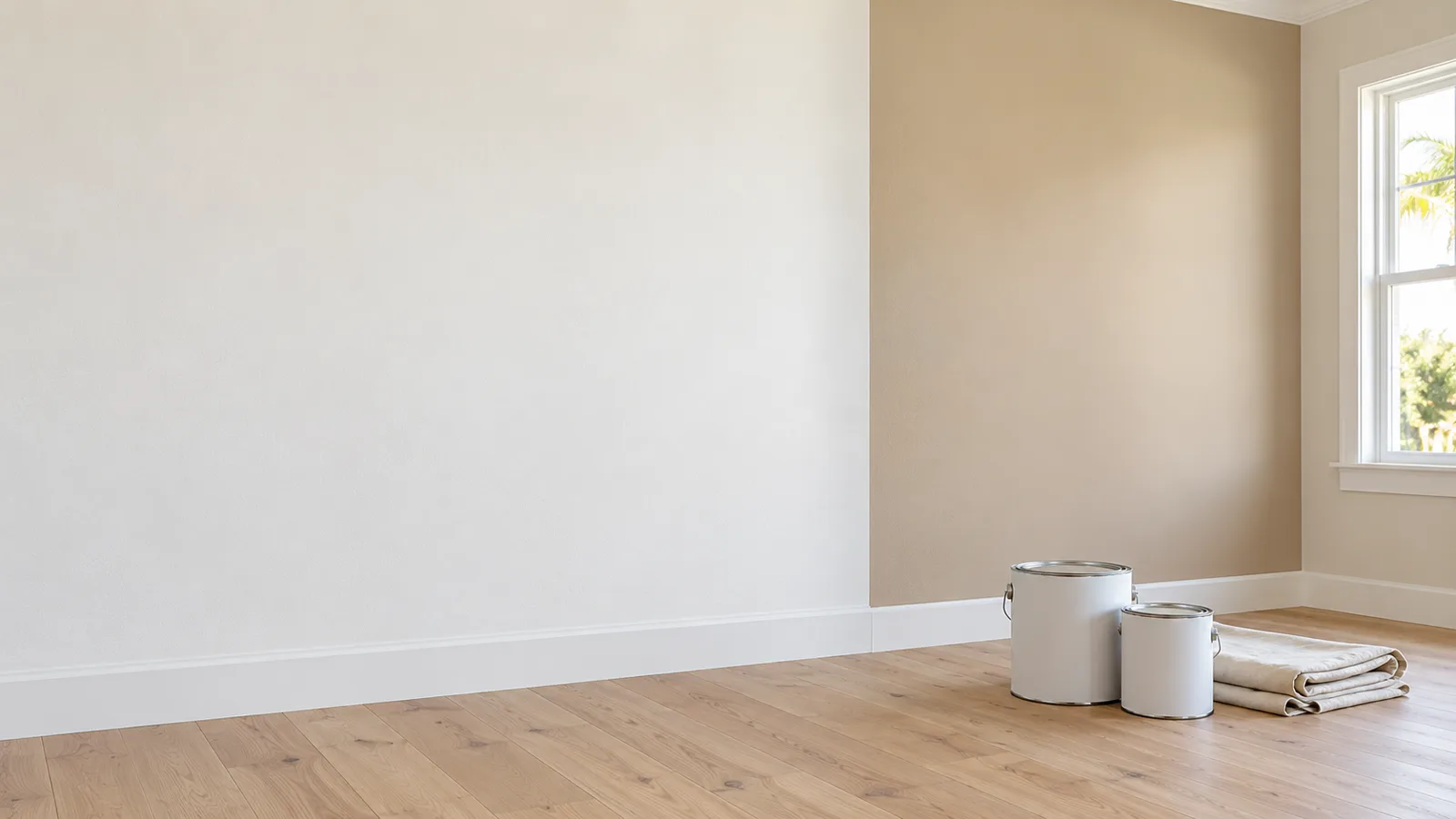
Plastic sheeting is taped tight at the baseboards, with a walkable layer over it so the crew is not slipping on wet debris.
Plastic runs from the ceiling line to the floor on every wall, because wet texture streaks paint and gets into outlets.
Ceiling fans and light fixtures are taken down or bagged, and supply registers and returns are sealed so the system does not pull dust through the house.
Openings get zippered plastic doors, and furniture is moved out of the room or wrapped in the center of it. The texture is misted, given time to soften, then scraped with a wide blade straight into the plastic. When the ceiling is bare, the sheeting is rolled inward with the debris inside it, bagged and hauled away, so you are not vacuuming vermiculite out of carpet for a month.
A scraped ceiling was never meant to be seen. Tape joints, screw pops, dents and old patches that the texture was hiding all show once it is gone, and the drywall paper may be scuffed where the blade caught it. Painting straight over that leaves a ceiling that looks worse than the popcorn did.
Joint compound, the gypsum-based paste used to finish drywall, is troweled across the whole ceiling in thin passes and sanded between them. Drywall finishing is graded on levels from 0, nothing done, up to 5, the most uniform surface, and a smooth ceiling that catches raking light from a big window needs to sit near the top of that scale.
An orange peel or skip trowel finish forgives small flaws and takes less sanding. Those were the usual finishes for kitchens, living rooms and bathrooms even in houses where the bedrooms and halls got popcorn, because they are tougher and easier to wipe clean.
Fresh compound is porous and soaks up paint unevenly, so the ceiling is sealed with a drywall primer before the finish goes on. The sheen and the number of finish coats are written on the scope, so you know what the last pass will look like before the first one starts.
A positive lab result changes who does the work, and it stops the scraper before it starts. Cal/OSHA requires any contractor who removes 100 square feet or more of material containing more than 0.1 percent asbestos to be registered with it, and a painting crew is not that contractor. A ceiling that tests positive goes to a licensed abatement contractor for removal, or it stays where it is.
South Coast AQMD, the air district for large areas of Riverside County, sets survey, notification and work practice requirements for asbestos under its Rule 1403. Its homeowner exemption is narrow: it covers an owner who lives in the house and does the renovation personally, not hired laborers, friends or family, and the district itself does not recommend that homeowners remove asbestos.
EPA's guidance is that material in good condition that will not be disturbed is usually best left alone. That leaves two honest choices for a positive ceiling: keep the texture as it is and repaint the walls around it, or have the abatement handled first and then book us for the skim coat and paint on the clean drywall.
Whichever you choose, you see the lab report, the options and a written scope before you decide, and nobody on our crew puts a blade to a ceiling that tested positive.

Popcorn ceiling removal in Temecula is typically estimated at roughly $1,000 to $3,500 for scraping, skim coating and painting a set of rooms, and painting a single ceiling that has already been scraped is typically estimated at roughly $300 to $900. Those are trade figures for planning, and the walk is what turns them into your number.
Every figure here is an estimate and subject to change. Your final price is the one in the written quote, prepared after we walk the rooms, measure the ceilings and read the lab result.
Landlords, property managers and community associations get the same test-first sequence, organized around people who still live there. A rental between tenants is the easiest time to clear a ceiling, and a vacant unit can be sealed, scraped and refinished as part of a make-ready through our unit turnover service.
Occupied buildings need a plan the residents can read. We write a schedule by unit or by hallway, post notices before work starts, and keep each sealed area closed until its ceiling is primed. Boards and managers who want a whole building priced can send the unit count and the lab results they already hold, and the bid comes back organized by building.
For a house you live in, the path is simpler: call, book the walk, and we look at every ceiling you want gone and tell you plainly which ones should be tested first.
The process
Four steps, and no paint goes on until you have signed off on the scope and the colors.
We go around the house or property with you, check the stucco, the trim and the existing coating, and note what inland sun, dust and dry Santa Ana winds have done to each elevation.
The prep, products, colors and dates arrive in writing. For a community or a commercial building the scope is split into phases, so every resident or tenant knows their day.
Washing, scraping, patching and caulking come before any color, since that is what the new coating grips. Primer follows where the surface needs it, then the finish coats.
We walk the job again together before calling it finished, and touch up anything you flag.
Service area
Questions
It is typically estimated at roughly $1,000 to $3,500 for a set of rooms that are tested, scraped, skimmed and painted, with ceiling area, height and the repairs found under the texture moving it most. Your written quote sets the final price.
Yes, before anyone scrapes it. Asbestos cannot be identified by eye, and texture applied through the 1980s can contain it, so a sample goes to a lab first and the result decides whether we remove it at all.
We do not skip it. The odds are lower on a newer ceiling, but EPA is clear that you cannot tell by looking, and the lab result is the only thing that turns odds into an answer before dust is in the air.
Nothing gets scraped by us. Removal goes to an abatement contractor registered with Cal/OSHA, or the ceiling is left undisturbed, and either way we can come back afterward for the walls or the finish work on clean drywall.
The rooms being worked on are sealed and closed to use until their ceilings are primed, and the rest of the house stays open behind plastic doors. The start date and the expected length of the job are both written on your estimate.
Often they do. Scraping and skim coating tend to scuff or splash the top of each wall, so most owners book the walls in the same visit, and the estimate prices the ceilings alone and the ceilings with walls so you can choose.
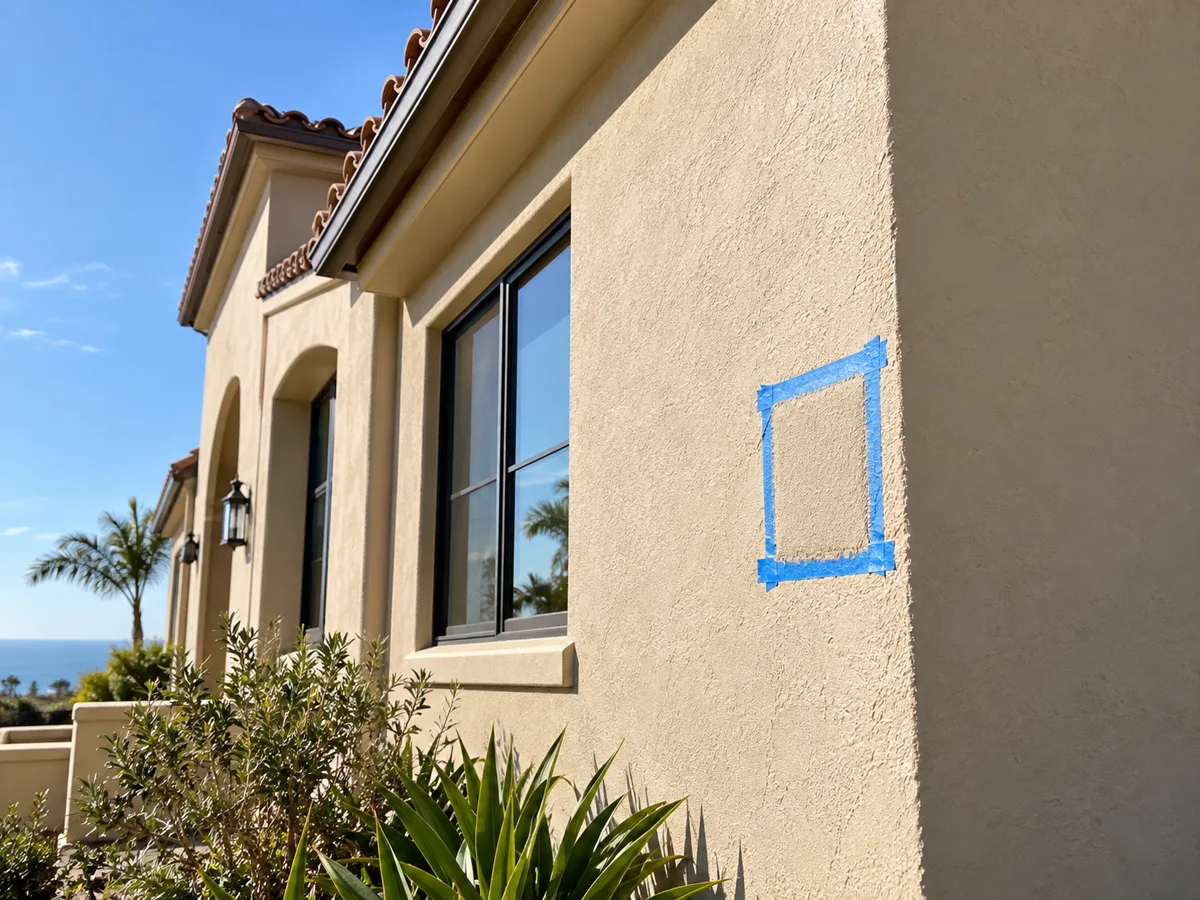
Yes. An orange peel or skip trowel finish hides small flaws with less sanding than a full smooth skim, and we can roll a small test patch so you see the texture before the whole room gets it.
Yes. We walk the rooms, check the ceiling heights and condition, and leave you a written estimate that lists the test, the containment, the finish and the coats, with no obligation to book.
Homeowners get a free estimate at the property. Boards, managers and builders can send plans or a unit count for a bid.
Licensed, insured and bonded · License #585047. Calls only, we do not receive text messages.