Skip to content
Call (951) 297-9994Licensed, insured and bonded · License #585047

Cedar Shake and Shingle Staining and Painting in Temecula

Temecula Premier Painting is Riverside County's trusted specialist for cedar shake painting in Temecula, CA, specializing in solid-colour staining, semi-transparent staining and shingle painting over a stain-blocking primer. We offer split shingle replacement and sprayed, back-brushed application.

  • Free on-site estimate
  • Written scope, coat by coat
  • Colors you approve first

Get a free painting estimate

Or call (951) 297-9994. Calls only, we do not receive text messages.

About our cedar shake & shingle siding painting

Our team provides a straight answer on staining versus painting for your shakes, delivering gables and accent walls that keep their texture instead of looking plastered over, for both residential and commercial projects. We brush out a sample of each finish on your own shingles, and the crew that approves it with you is the crew that sprays and back-brushes the whole wall, coat by coat.

From swapping a cupped shingle for a pre-stained replacement to working stain into the grooves of every course, our team handles every detail. Serving Temecula, Rainbow, Hidden Meadows and Bonsall, we give a barn gable the same prep as the front of a house.

Why Temecula Premier Painting

How We Work

The person who looks at your walls is the person you call back, from the estimate to the final walk.

Scope in writingEach surface gets its prep, primer and coat count spelled out
Samples up firstColors tested on your own wall, and HOA submittals ready for the board
Named crewThe crew written on the estimate is the crew on your driveway
Licensed & bondedInsured, with the California licence number in the header and footer

Solid stain, semi-transparent stain or paint

Most cedar shakes in Temecula are best finished with a stain, and the choice between solid and semi-transparent depends on whether the shakes have been painted or solid-stained before. Wood stain colours the wood while leaving the grain visible, and penetrating stains weather away gradually rather than peeling, so they are renewed by cleaning and recoating instead of stripping. Paint gives the most even colour but is the least forgiving on rough, absorbent shakes.

Semi-transparent stain

Shows the grain and the texture of the shake. It performs best on rough-sawn and weathered wood, which soaks it in, and rough or weathered shakes can take two coats, the second brushed on while the first is still wet. It has to be renewed more often than a solid stain, and it cannot go over a solid stain or old paint, because it has nothing to soak into.

Solid-colour stain

An opaque finish with more pigment than a semi-transparent stain and less than paint, in practice close to a thin paint. It hides old colour and uneven weathering while letting the shape of each shake show. Acrylic solid stains generally outperform the oil-based versions, which form a film that can peel.

Paint

Paint is used on shingle sidewalls, and some coatings are made specifically for shingles, but it forms the thickest film. On shakes that film can hold moisture in the wood, and once it starts to peel, every shingle has to be scraped. We recommend paint mainly where the shakes are already painted and sound, or where you want a colour no stain offers. Your choice gets made on your own shingles. We brush out each candidate on a test section, let it dry, and you pick in daylight.

Tannin bleed and stain-blocking primer

Cedar bleeds tannin through light colours unless it is sealed with a stain-blocking primer first. Western red cedar and redwood carry water-soluble extractives in the wood, and when water moves through a shingle it carries them to the surface, where they dry as reddish-brown streaks that show most on white, cream and other light paints or solid stains.

  • Light solid-stain or paint colours get a stain-blocking primer under them, on new and stripped shingles alike.
  • The butts and edges of replacement shingles are coated, since unfinished backs let rainwater seep behind and discolour the edges.
  • Existing bleed is cleaned off before priming, because a primer over a stain locks the stain in place rather than removing it.
  • Darker and semi-transparent finishes hide tannin better, which is one reason a natural cedar colour is often the easiest finish to keep looking right.

If you see brown streaks on new cedar a few weeks after a light colour went on, the primer step was skipped or the wood was wet when it was coated. We check moisture in the shingles before any primer goes on.

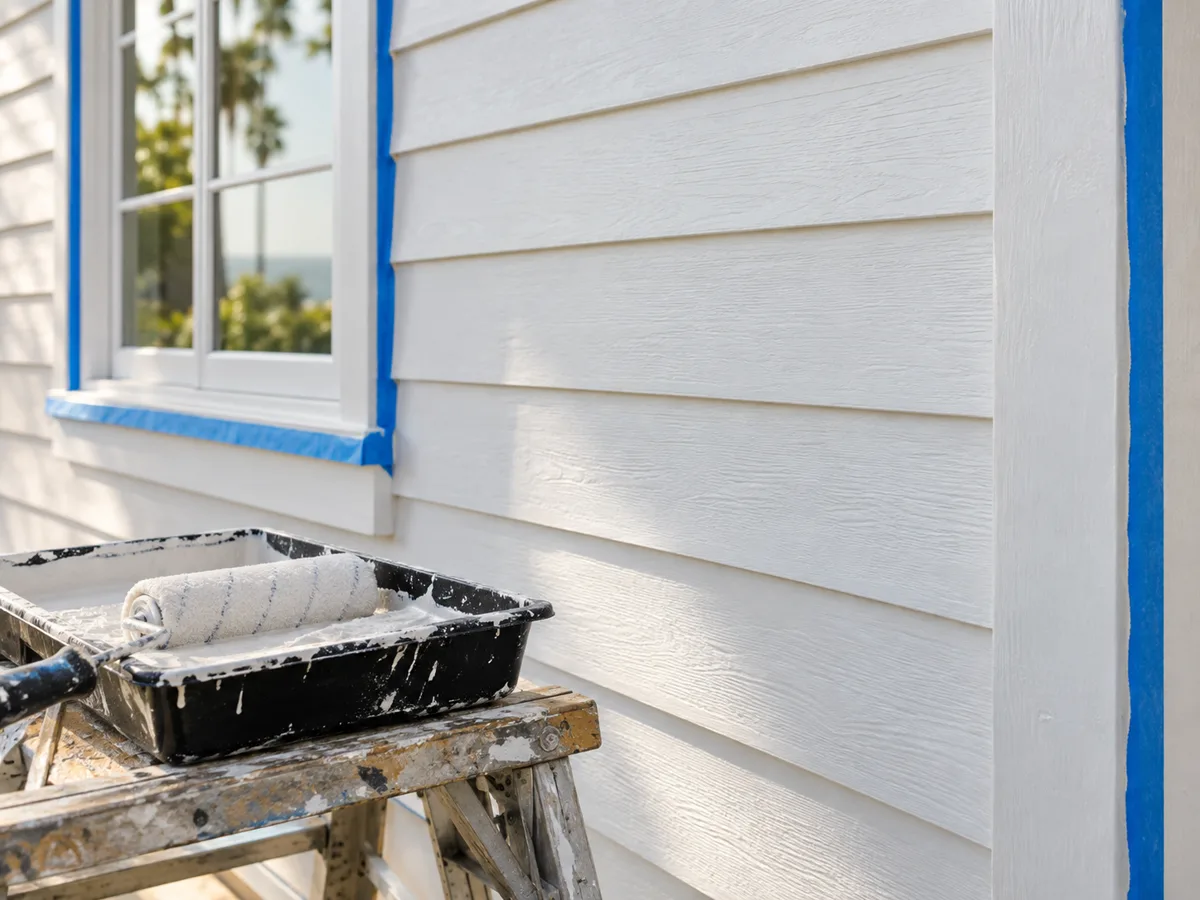
White lap siding with blue masking tape along the window and corner trim, and a paint tray with a loaded roller resting on a paint-spattered sawhorse.

Replacing split and cupped shingles

Split, cupped or missing shingles are replaced before any coating goes on, because no stain or paint can hold a broken shingle together. Shingles are sawn and shakes are split from a block of wood, and both need edge-grain cutting to resist warping and splitting as they dry. Shingles and shakes expose a lot of end grain, so they absorb moisture fast and shrink and swell more than siding boards, and flat-grained pieces cup far more than edge-grained ones.

  • Shingles split through, cupped away from the wall or loose at the nails are pulled and replaced.
  • Replacement shingles are coated on the face, back and butt before they are installed, since the first coat is best applied before installation so every surface is covered.
  • New shingles are set with the same exposure and gap as their neighbours so the course lines stay straight.
  • Where sun has bleached the old shingles grey, replacements are pre-stained so they do not stand out as bright new wood.

Western red cedar is naturally rot-resistant, which is why it is used for shingles and siding, but that resistance comes from compounds found mainly in older heartwood. A shingle that is soft to the probe gets replaced, not stained.

Spraying and back-brushing rough texture

Rough-sawn and grooved shakes are sprayed and then back-brushed, so the coating reaches into every groove instead of bridging over them. Modern shakes are usually left undressed with a rough, corrugated surface, and a spray gun alone lays stain on the high points while the low ones stay dry.

Brushing works finish into wood better than a roller or a spray, especially on the first coat, so the crew sprays a section, then follows straight away with a brush to push the wet stain into the grain, the butt edges and the gaps between shingles. On a semi-transparent system the second coat goes on while the first is still wet, which only works when the person spraying and the person brushing move together.

Wind decides the spray days. Temecula sees strong, dry Santa Ana winds from late fall into winter, and stain mist carries a long way in a gust, so on windy days the work switches to brush only or waits.

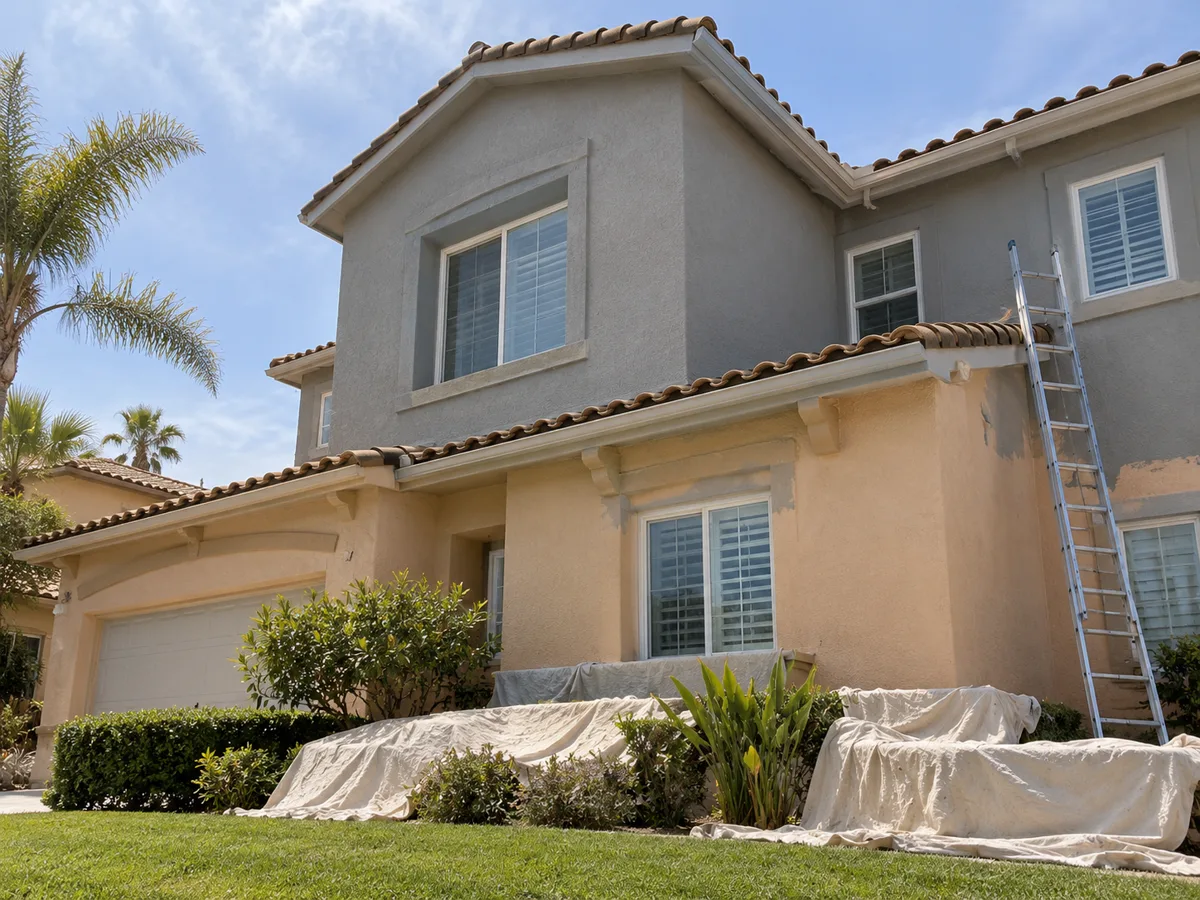
Two-story stucco house mid-repaint, the upper storey fresh warm grey and the lower storey still faded peach, an aluminium extension ladder against the wall and drop cloths over the shrubs.

Cedar shingle and shake pricing per wall

Cedar shake and shingle staining or painting is typically estimated at roughly $1.50 to $4 per square foot of wall, and the spread comes mostly from how many shingles need replacing and which finish you choose.

  • Wall area and height: a two-story gable needs more ladder or lift time than a porch accent wall.
  • Shingle replacement count, and whether pre-stained replacements are needed to match weathered ones.
  • The finish: semi-transparent stain, solid stain, or paint over a stain-blocking primer.
  • Moving from paint or solid stain back toward a natural look, which means stripping and often replacement.
  • Tannin cleanup and primer under light colours.
  • Outbuildings, barns and detached studios priced as their own elevations.
  • Access around roofs, slopes and planting.

These figures are estimates only and subject to change; your final price is set in the written quote we give you after counting replacement shingles and measuring the walls.

Shingle facades on businesses and outbuildings

Cedar shingle accents also turn up on commercial buildings, tasting rooms, barns and event spaces, where the work has to fit around opening hours. For a business or a ranch owner with several buildings, we bid by building and elevation, sample the finish on a section you choose, and schedule the spray days for when guests are not on site.

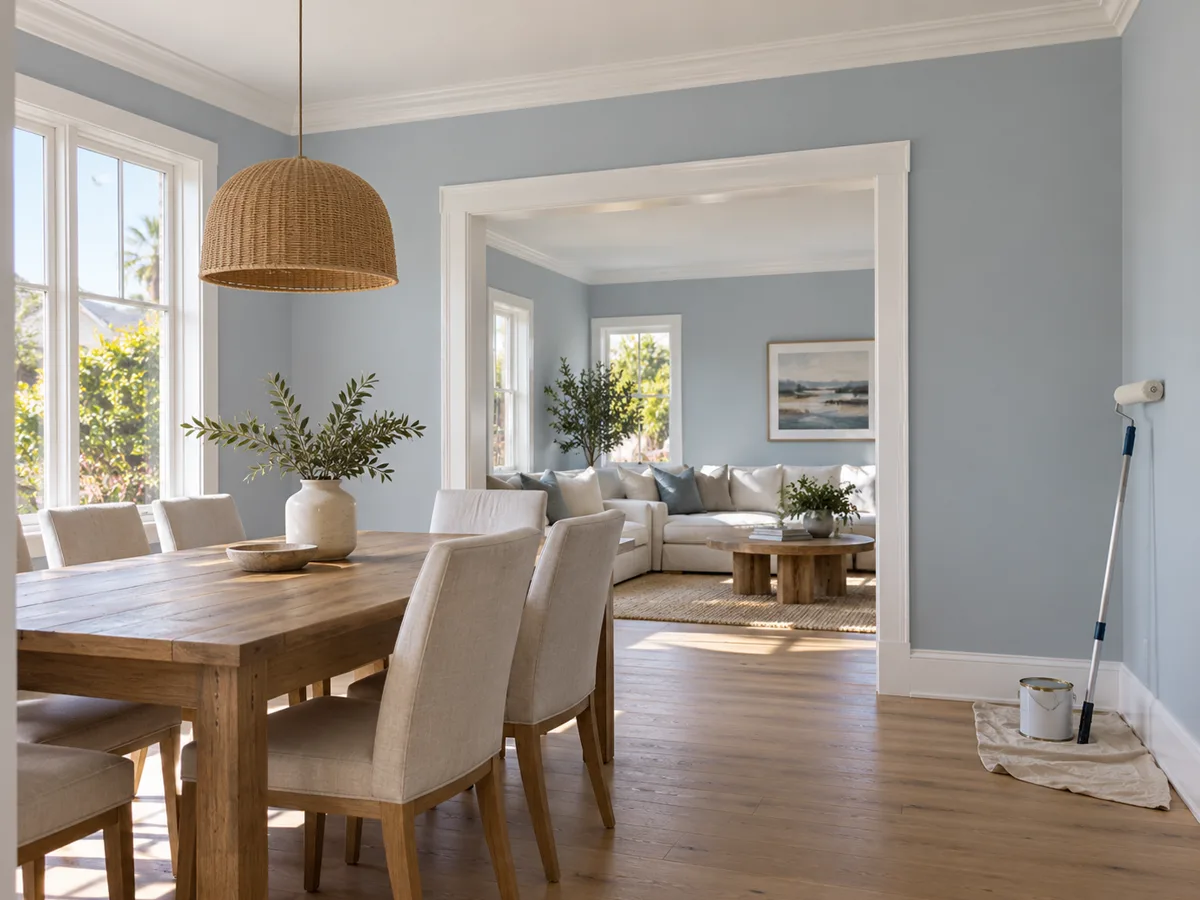
Dining and living room with soft blue-grey walls, white trim and crown moulding, a wood dining table under a woven pendant, and a roller on an extension pole beside a paint can in the corner.

Colors and Finishes

The process

How a Painting Job Runs

Four steps, and no paint goes on until you have signed off on the scope and the colors.

  1. The walk

    We go around the house or property with you, check the stucco, the trim and the existing coating, and note what inland sun, dust and dry Santa Ana winds have done to each elevation.

  2. The written scope

    The prep, products, colors and dates arrive in writing. For a community or a commercial building the scope is split into phases, so every resident or tenant knows their day.

  3. Prep, then paint

    Washing, scraping, patching and caulking come before any color, since that is what the new coating grips. Primer follows where the surface needs it, then the finish coats.

  4. The final walk

    We walk the job again together before calling it finished, and touch up anything you flag.

Questions

Cedar Shake & Shingle Siding Painting: Common Questions

Should cedar shakes be stained or painted?

Stained, in most cases. A semi-transparent or solid stain suits rough cedar shakes and is easier to renew, while paint forms a thicker film that can hold moisture and peel. Paint makes sense mainly on shakes that are already painted and still sound.

My shakes were painted years ago. Can they go back to a natural stain?

Not directly. A semi-transparent stain cannot soak into wood that is covered in paint or solid stain, so going back to a natural look means stripping, and badly weathered shingles may need replacing. A solid stain is the usual middle ground.

Why are there brown streaks on my new cedar shingles?

That is tannin bleed, natural extractives carried out of the cedar by moisture. It shows most on light colours. The fix is cleaning the streaks off and sealing with a stain-blocking primer before the finish coats.

Do you replace split or missing shingles?

Yes. Split, cupped and loose shingles are replaced before coating, and every replacement is coated on its face, back and butt before it goes on the wall so it matches and lasts.

How often do cedar shakes need restaining?

A semi-transparent stain needs renewing more often than a solid stain, and sun-facing walls wear first. Because penetrating stains weather away rather than peel, renewing them is a clean-and-recoat job, not a strip job, and we point out when your walls are due.

How much does cedar shake staining or painting cost in Temecula?

It is typically estimated at roughly $1.50 to $4 per square foot of wall, with replacement shingles and the finish chosen moving it most. Your written quote sets the final price after we count and measure.

Can you stain shingles on a barn or outbuilding?

Yes. Barns, studios and detached garages get the same replacement, priming and back-brushing as the house, priced as their own elevations so you can do them together or later.

Free on-site estimate

Talk to us about cedar shake & shingle siding painting

Homeowners get a free estimate at the property. Boards, managers and builders can send plans or a unit count for a bid.

Call (951) 297-9994

Licensed, insured and bonded · License #585047. Calls only, we do not receive text messages.

Call (951) 297-9994Licensed, insured and bonded · License #585047