
Limewash and Mineral Coatings in Temecula, Breathable by Design
Temecula Premier Painting applies limewash and mineral coatings in Temecula, CA, including silicate coatings, to stucco, brick, block and plaster that need to breathe. These finishes bond with the wall instead of sitting on it, and they age into soft, cloudy color rather than peeling.
- Free on-site estimate
- Written scope, coat by coat
- Colors you approve first
About our mineral coatings
Our team uses limewash and silicate paints where the wall's chemistry matters more than a plastic film. Lime and silicate coatings react with mineral surfaces such as stucco, masonry and plaster, so they let moisture pass through and do not trap it behind a skin of acrylic.
From a Spanish-style stucco facade to a brick fireplace or a plaster accent wall, we prepare the surface, test a sample on the wall itself and apply by brush for the layered, cloudy look limewash is chosen for. We serve Temecula and nearby Valley communities, and we explain at the walk what the finish will do over the years.
Why Temecula Premier Painting
How We Work
The person who looks at your walls is the person you call back, from the estimate to the final walk.
Limewash, silicate and clay: what each one is
These three finishes are often lumped together, and they behave differently. Choosing between them starts with the wall and ends with the look you want.
- Limewash is slaked lime and water with natural pigment. It cures by absorbing carbon dioxide, which turns it back into stone-like calcium carbonate, and it gives a soft, variable, chalky matte.
- Mineral silicate paint uses potassium silicate as the binder. It chemically bonds to mineral substrates and holds color with very little fade, and it suits exteriors that take a lot of sun.
- Clay and mineral-based interior paints are fine-grained, matte and breathable, suited to plaster and drywall rooms where texture and low sheen are the goal.
None of them is a good fit over a glossy or peeling acrylic coating without removing it first. We check what is on the wall before we recommend anything.
Where mineral coatings work well in Temecula
Mineral coatings suit the wine-country and Mediterranean look that much of Temecula's architecture is already built around. Stucco facades, plaster arches, brick chimneys and block garden walls all take them well.
Common jobs include:
- Unpainted or previously limewashed stucco, where a breathable coat keeps the wall's character.
- Brick chimneys, fireplaces and courtyard walls that you want softened without sealing.
- Plaster accent walls and arched niches indoors.
- Estate homes and winery buildings around the valley that want a hand-finished, aged look.
Temecula's dry summers and strong sun are kind to mineral paint. The heat helps it cure, and a silicate finish keeps its color. The main enemy is trapped moisture, so a breathable coating on a wall that gets irrigation splash is often a better choice than a plastic film.
Preparation decides whether it lasts
Mineral coatings need the right substrate, so preparation takes more care than a standard repaint. We start by finding out what is already on the wall and whether it will accept the new coat.
- Test. We try water absorbency and adhesion on a small area to see how the wall behaves.
- Clean. Dirt, chalk, efflorescence and loose paint come off before anything goes on.
- Strip or prime. Glossy paint and sealed acrylics either come off or get a mineral-compatible primer, and bare masonry is dampened so the lime cures evenly.
- Repair. Cracks and spalling are patched with a compatible material.
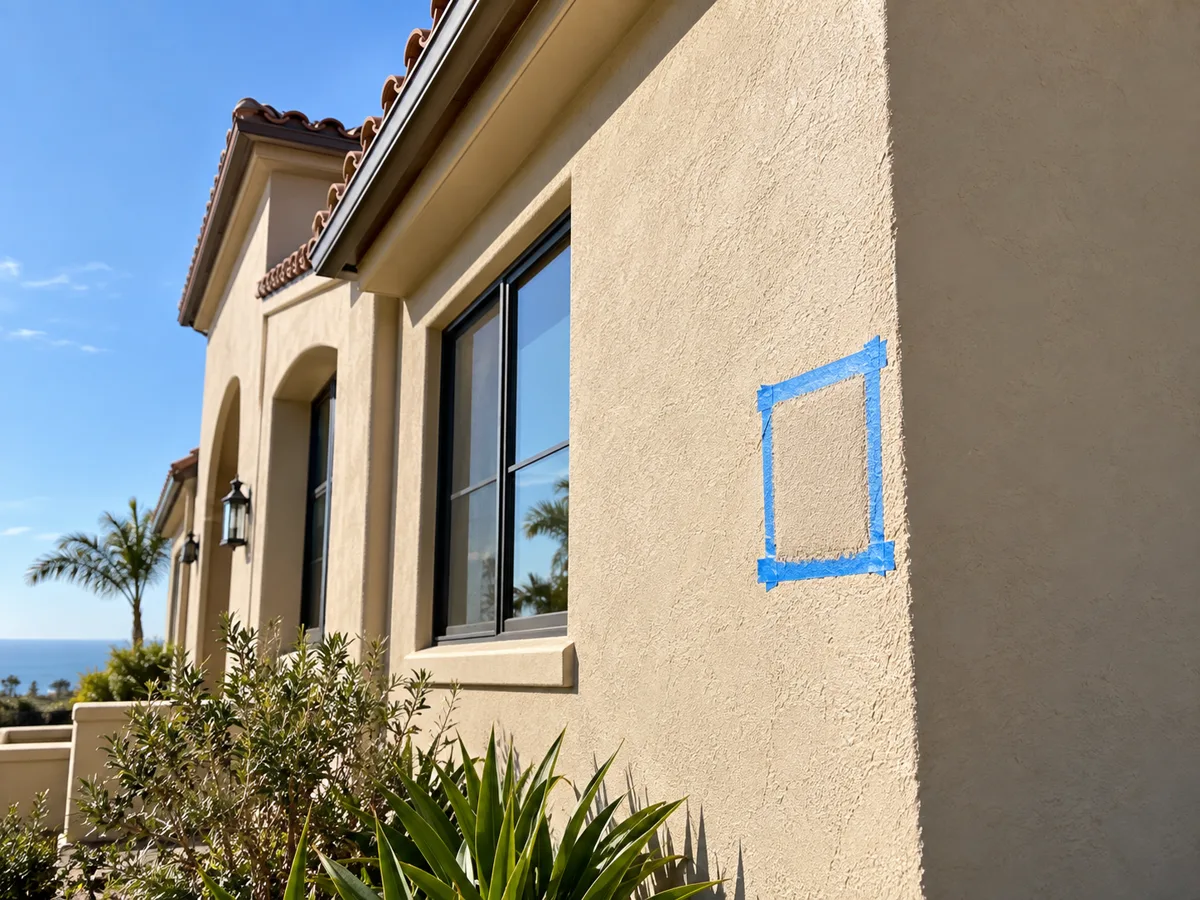
- Sample. A patch goes up on the wall, and you see it dry, because limewash looks much darker wet than it will finish.
Skipping the sample is the most common mistake on these jobs, since the color you see wet is not the color you get. We do not apply a full wall before you have approved a dry patch.
How it looks and how it ages
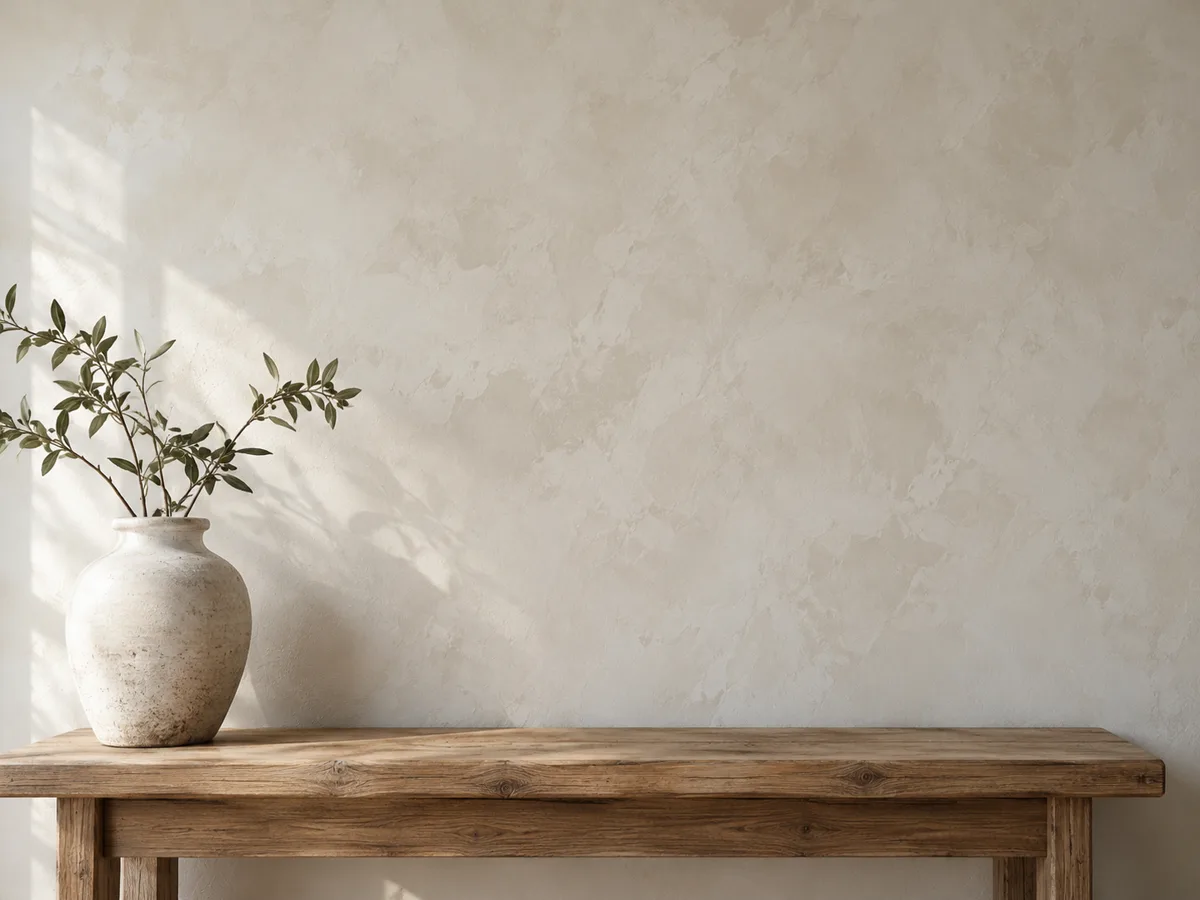
Limewash is meant to look hand-made. It goes on in thin, crossed brush coats, which leaves soft variation and visible movement across the wall. Silicate paint is more uniform, with a flat mineral matte.
Over time a limewashed wall weathers gracefully, gaining depth in the sun and chalking slightly. When it needs refreshing, a new coat goes right over the old one without stripping, which is a real advantage over a film that has to be scraped.
One honest trade-off: limewash is not a scrubbable finish. On a hallway or a child's room it will mark, so we point you to a washable mineral or low-sheen alternative when that is the better call.
Stucco walls are the most common surface, see stucco painting. Brick and block take these coatings well, see brick and masonry painting. Older homes are covered under historic home restoration painting.
Mineral Finishes

The process
How a Mineral Coating Job Runs
Four steps, and the full wall is never coated until you have approved a dry sample.
Read the wall
We look at the substrate, the existing coating and how the wall handles moisture, and say whether lime or silicate is the right choice.
Sample on site
A patch goes on the actual wall, in your light, and we wait until it is fully dry before you decide.
Prepare and prime
We clean, repair and prime or strip as needed so the coating bonds to the mineral surface.
Apply and walk
Thin coats go on by brush with drying time between them, and we check the finish with you in daylight.
Questions
Limewash and Mineral Coatings in Temecula: Common Questions
What is the difference between limewash and regular paint?
Regular paint forms a film on the surface. Limewash and silicate paints bond with mineral surfaces and let moisture pass through, so they do not peel. They also look more varied and matte.
Can limewash go over already painted stucco?
Not over a glossy or sealed acrylic coat without preparation. We test the wall and either remove the old coating or use a compatible primer. A bare or lightly coated surface is ideal.
Will limewash hold up in Temecula sun?
Yes. Dry heat helps it cure, and mineral pigments resist fading. The thing to watch is moisture from irrigation, which is why we check sprinklers and drainage at the walk.
Why does the sample look so different wet?
Limewash dries several shades lighter than it looks wet. That is why we put up a patch and wait until it has dried before you choose.
Is it washable?
Limewash is not scrubbable, so it is better for walls that are rarely touched. A washable mineral paint is a better fit for hallways, kitchens and kids' rooms.
How do I refresh it later?
Add another coat over the old one. Mineral coatings do not need to be stripped first, which makes upkeep easier than on a peeling film.
Can it go on brick?
Yes. Brick takes limewash well, and we can soften or lightly tint it while leaving it breathable. We confirm the brick and mortar are sound first.
See a limewash sample on your own wall
Homeowners and estate owners get a free design walk. We will put a sample patch up in your light before any full wall is coated.
Licensed, insured and bonded · License #585047. Calls only, we do not receive text messages.